

Hiking boots are the most essential piece of gear when it comes to hunting and hiking. There is nothing worse than being miles away from a trailhead, campsite, or home, and realizing that you have the wrong boots for the job. With this in mind, there are some things you should look for when buying a new pair of the best hiking boots you can find.
Some questions to ask yourself before making your purchase: what type of terrain will I be on? Will I be wearing these all day long? Do I want waterproof or non-waterproof? What’s my budget? These are just some things to consider before purchasing your next pair of high-quality hiking boots!
What to Look For in Hiking Boots
Leather or fabric? Leather boots will only get better with age and can be resealed. If you get leather boots, be sure you get some leather waterproofer and re-seal them a couple times a year.
Hiking or backpacking boots? Hiking boots are more comfortable and built to take the punishment of regular hiking. Backpacking boots have a stiffer sole for stability on uneven ground. If you are worried about ankle twists on rocky or rooty terrain, consider going with the heavier-duty sole. Otherwise, lighter hiking boots are far preferred.
Boots made in America or other countries? No matter the origin, look for quality construction and materials. I just recommend buying from an established brand. In the past few years, lots of overseas-made, Amazon-sold boot companies have popped-up out of thin air. I prefer the companies that actually have a track record.
Types of Boots
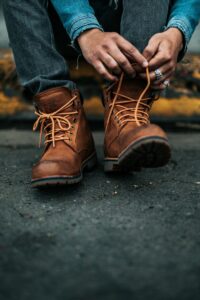
Hiking boots are not all created equal. There is a big difference between casual hikers and hardcore mountaineers, so knowing your hiking style will help determine which type of boot you need for the hike ahead.
Light Hiking Shoes
Similar in many ways to running shoes, but with a little more structure, light hiking shoes are perfect for day hikes where the terrain will be manageable. They’re burly enough to be used by long-distance backpackers when they want an ultra-light fit. North face hiking shoes are a great example of what we mean by lighter hiking shoes.
When it comes down to it, these days as more products verge on being crossovers, there is a fine line between hiking boots vs. hiking shoes vs. trailing running shoes.
In my experience, hiking shoes are the fastest-growing segment of hiking footwear, and for good reason.
Mountaineering Boots
If you’re an adventurer who needs a boot that’s tough as nails, these are the ones for you. The treads on this shoe can handle all sorts of terrain and will stay glued to your feet no matter how rough things get. They will be overkill for well-maintained, good conditions though. These are boots you want to wear if you think you will encounter ice, snow, or lots of loose rock.
Backpacking Boots
These sturdy boots are the perfect protection for your feet when you’re trekking point-to-point and need to be ready for a little of anything. The thick rubber sole provides stability and durability even on slippery surfaces or over jagged terrain. They are often waterproof as well. These are great if you are backpacking vs. just hiking.
Boot Materials
The suitable materials will keep your feet cool, dry, and comfortable while you’re on the trail. So whether it’s a hike through nature or urban exploration, be sure to choose boots made of leather for high durability in all conditions. A bonus is that they’ll stay looking good long after many other fabrics have faded away!
Synthetics
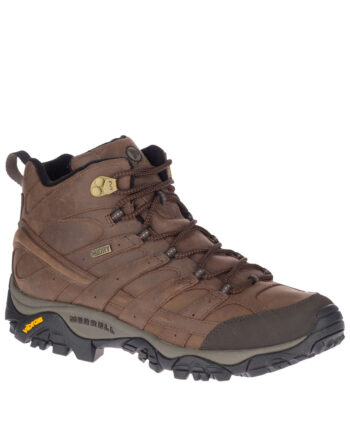
The materials in this category are often nylon and polyester. The lighter weight of these fabrics makes them easy to break in, while the increased comfort means people stay on their feet for longer hours than they do with other types of shoes. However, if you’re doing a lot of walking or standing, water is more likely to find its way into your shoe through any small hole, which can lead to blisters!
Split-grain Leather
When it comes to leather, the most durable and breathable material is full-grain. So what if you want something more affordable? Try out a half-leather/half synthetic blend! While these shoes can’t compare in durability or water-resistance as well as full-grain leather, they will still be very comfortable and practical for your average day on the go, protecting from minor hazards like rain droplets along with easy maintenance due to their relative affordability.
Full-grain Leather
Most mountaineering boots are made with full-grain leather. This material is not as durable as other materials, but it’s perfect for those looking to take on challenging terrain and can last up to five years before wearing down or breaking in some cases!
Type of Cut
Hiking boots come in various cuts, and this should be tailored to your type of trekking — the wrong cut could cause a rolled ankle or rocks in your shoes. There are three cuts to consider:
Low-cut
While this shoe cut is perfect for lightweight, casual hiking, the risk you take with your ankles will not be worth it. Boots in this cut should only be worn on well-maintained trails where there’s less risk of an ankle injury. Rocky hiking trails are notorious for twisting one’s ankle, and while a boot can prevent a twist, it can limit the amount of roll that occurs. When I use lower-cut hiking shoes on a rough rocky trail, I know I’m increasing my chances of hiking injuries.
Mid-cut
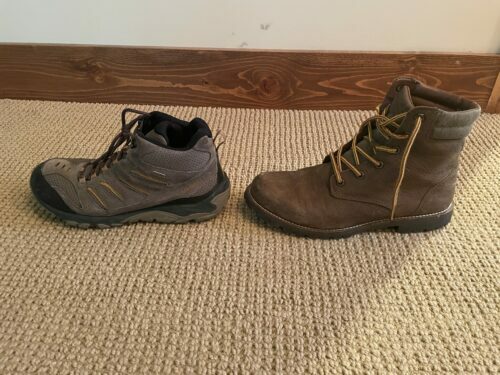
If you’re an active hiker or even a jogger who likes to tackle loose dirt trails that benefit from extra traction, this may be the perfect shoe for your needs. The trail-specific design of these shoes and boots feature more ankle support and balance and a better buffer from debris along the way.
High-cut
The best way to combat the instability of rough terrain is with a boot that offers optimal balance and ankle support. These boots are perfect for those who frequently travel off-trail or on potentially dangerous ground. If you walk in areas with poisonous snakes, the higher boots are often a good idea (snake bites usually occur on feet and ankles).
Insulation
 Insulation is an essential factor to consider when picking out a pair of boots. You’ll want something that can keep your feet warm on those long hikes but won’t make you sweat too much in the summertime!
Leather-and-synthetic or full leather can be insulated with natural wool or synthetic fibers, which provide good insulation without trapping heat.
Fabric inserts are lightweight and inexpensive but don’t block wind or insulate the two materials listed above.
Anti-odor technology can be added to uppers for all of these types, which will help keep your shoes from getting stinky!
Lightweight boots without insulation will be a good option on warm days or if your primary locations are tropical. However, keep in mind that while wearing these on cold days can be uncomfortable, they’re a bad pick for heavy snowfall—you’ll need to purchase a pair with more insulation, or you will need to invest in some good wool socks to augment the boots.
Waterproofness
Wet feet are a drag. Having wet feet for hours when hiking can be both uncomfortable and unhealthy.
Ankle-high boots can be waterproofed or have a waterproof membrane built into the design. While this isn’t necessary for light rain, it’s essential to take advantage of when your location has rainy weather all year round.
Waterproofing adds to the cost of your boot, and, for some people, low price is a priority.
If you are spending a lot of time in snowy weather, take the extra money to go for waterproofing! Your feet will thank you. If, however, you’ll be traveling somewhere with a “dry season” (regional monsoon), then your wallet may appreciate something more lightweight and cheaper.
High-cut boots tend to be fully waterproof, whereas low-cut boots more often have a water-resistant membrane. However, waterproof membranes can be damaged if submerged in water for extended periods—this is why high-cuts are preferable when traveling through wet regions.
Sole Type
The sole — or the bottom surface of the boot — is a critical part of what the boot will give you while on the trail. The sole is comprised of two parts. The insole is
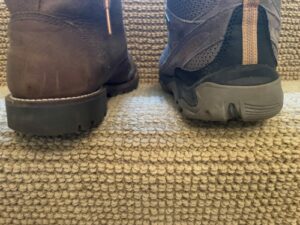
the piece closest to your foot (which connects to the shank) and the outsole is that piece that makes contact with the ground. Together, they protect your feet from the surface beneath you.
Harder soles — including those lines with a thin layer of metal or steel — are good for people who might find themselves on jagged rocks, or walking across surfaces with potential nails or spikes sticking up. Most hunting boots have a harder sole because you may find yourself on rough ground that requires firm traction. They are also good for people who may be using ATVs or snowmobiles.
Durability
While it’s tempting to pick out a lightweight, low-cut, and ultra-affordable boot, these are going to be less durable.
A more rigid, more robust material will last you longer. In contrast, materials like leather can wear down quickly when traversing rough ground or walking in the rain for long periods.
The type of tread you choose is also necessary; the amount of grip on your soles will determine how long you can travel without changing shoes.
Weight
High-cut boots tend to be heavier than low-cuts. However, there are ways to reduce the weight and bulkiness of both styles. In addition, a lighter pair of boots can save your feet from unnecessary pain!
If you’re a frequent traveler or walk a lot, reducing the weight on your feet is always welcome. However, weightier boots will cause additional pain around your ankles and knees when worn for long periods.
How do I break in my hiking boots?
The most important thing to remember when breaking in your boots is you’re not trying to break them; you’re trying to make them fit better. To do this, wear the shoes for short periods (only a couple of hours at a time) and try not to do too much walking in them. The general rule of thumb is to walk around the house or take a short hike, and if you start feeling sore, take them off and give your feet a break.
Try Them On For Size
Choosing the right pair of hiking boots or hunting boots is an essential creating consideration for people who spend a lot of time outdoors. Boots need to fit well, be durable enough to last you through your adventures, and provide insulation in cold weather climates. Many different factors go into choosing the perfect boot, so take your time to really decide which is the best for you!