Camping is taking on new importance as travel becomes more complicated and people focus on recreation while being socially-distanced. State parks and hiking trails are reporting big growth in visitors, and with hiking and the outdoors comes camping.
As people increase their enthusiasm around camping, it is important to note one important thing: While any camping is better than no camping, not all camping is the same!
We want to help you understand the various forms of camping, some of which are hardly camping at all, while others are bordering on wilderness exploration. However camping is appealing to you, we encourage you to get out there and explore the great outdoors.
Backpacking / Backcountry Camping
When we think camping at North Outdoors, we think about backpacking to a remote campsite — getting away from people, from devices, and experiencing the peace and quiet of nature. Perhaps the most rugged and extreme form of camping is the backcountry camping that is done on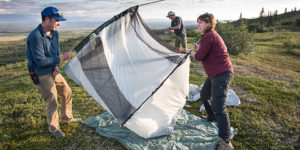 foot. At least, it is the most extreme on this list — we are not going to talk about camping on the face of a 20,000 foot mountain while climbing it. Backcountry camping is a great way to explore the outdoors and truly get away from it all.
Hiking and backpacking are similar, but backpacking takes hiking to a totally different level.
The downside, if there is one, is that you want to have good gear and know what you are doing. Backcountry camping isn’t for the faint of heart – you need to be ready for the conditions, whether they be cold temps, rain, heat, or whatever else Mother Nature throws at you. You also need to be able to navigate, as these conditions can take you to unfamiliar places where getting lost is common.
On the plus side, you can truly get away from it all, build confidence by sustaining yourself away from your kitchen, restaurants, and grocery stores, and connect with nature in a special way. Food-wise, you will probably be packing-in some freeze-dried camping meals, snacks, and perhaps relying on some fish you catch along the way.
For backpack camping, you will want to focus on having lightweight gear. Everything from your cooking stove to your tent should be geared for weighing as little as possible, and carrying on your back. You will want a good tent, but one that can stand-up to whatever the weather gods throw at you, without it being heavy or bulky. And keep in mind that you will be literally sleeping on the ground, so it is a good idea to have a lightweight camping mat (like the Megamat) along so make it a bit more inviting at bedtime.
Canoe Camping
A rewarding riff on backcountry camping is doing it by canoe. There are only a few places in the world where you can truly explore by canoe or kayak and camp all along the way. A few of the more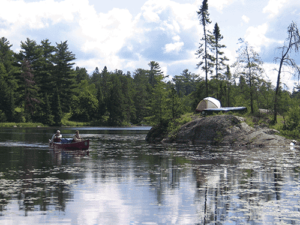 notable ones include the Boundary Waters Canoe Area (BWCA) in Minnesota and the adjacent Quetico park in Canada, and floating a river in many parts of the West, Canada, and Alaska.
A major benefit of canoe camping, such as in the BWCA, is how incredibly quiet and unpopulated it can be. It is just you and nature, on campsites that are marked on maps but not part of any maintained campground.
You will need to be in good shape. Why? In addition to paddling for anywhere from 1 to 10 miles per day, you will need to carry your canoe and all of your gear across “portages”, footpaths that get you from lake to lake. Some are perhaps 25 yards long and easy. Others might be 500 yards long and quite difficult. Bring the right gear, consider a lightweight canoe, and plan your route well!
Like backpacking, you will need lightweight gear, and it is a good idea to bring food with you. You may catch some fish and find some berries along the way, but you might not want that combo for three meals a day. Don’t forget about safety — you will want your canoeing lifejacket and good navigation to be sure you know where you are going in the lake backcountry.
Campground Camping
Perhaps the most common type of camping, and maybe what you thought of when you saw the headline of this article, is campground camping. Campground camping gives you the combination of 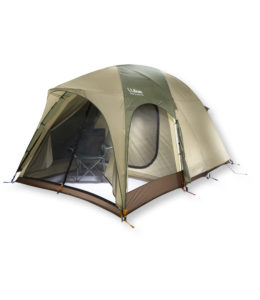 sleeping under the stars and outdoors, while still having access (typically) to amenities such as showers, bathrooms, picnic tables, a lakefront, and maybe even games like a volleyball court.
Some of our favorite campgrounds are operated by the Forest Service. Forest Service campgrounds are usually well-maintained and in very beautiful parts of the country, and often have fewer people than a National Park. They offer some basic amenities but try to keep the vibe rustic. You can find the USFS campgrounds here. Note that in some high seasons, you may need a reservation.
State parks, national parks, and private campgrounds (such as KOA, which is actually an internal franchise company) also offer campground camping, as so many more local venues. A major thing you will want to decide is how social — or not — you want your campground to be. Some can be quite a party, while others are just a step away from being backcountry camping.
One nice thing about campground camping is that you typically can drive right up to the camping site, or at least to a parking area just a short walk away. This allows you to pack more supplies and not be quite as economical about the things that you bring along.
A fun riff on campground camping can be bike camping, where you bike (with your gear in tow) to the campground, enjoy a night or two outside, and then bike back home.
RV Camping
RV Camping involves the use of a Recreational Vehicle — either a pull-behind or a driveable camper. RV Camping is a favorite of many, just because it allows you to explore and see new places, 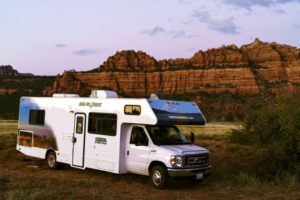 while knowing that your accommodations will be weatherproof and relatively comfortable. Another upside of RV camping is that you can carry quite a few things along with you. Packing light is not so much of a factor.
On the downside, RV camping is perhaps the most limiting of the options. You will typically be limited to campgrounds that have RV hookups for your water, electricity, and utilities, and — well — you will need to go somewhere that welcomes RVs. Still, it can get you out of the house and allow you to be a lot closer to the outdoors than you would be if you decided not to explore.
The other downside of RV camping is the cost. RVs are not cheap, but fortunately there is a growing industry of RV rental companies, which might be a great fit for many people who prefer not to invest in another expensive vehicle.
For people who want to camp with an RV, you might want to invest in some basic camping chairs so you spend time outside instead of in the camper, and even a portable solar panel which will help you avoid starting up your rig for power. Both will help you get a fuller experience of the outdoors.
Glamping
The word “glamping” only began to appear within the last 15 years, and if you haven’t guessed is a combination of the words “glam” or “glamorous” and “camping.” Glamping involves getting outside and sleeping in a tent, but those tents are usually quite nice and well-appointed. While we have noticed that the term has been used more loosely in recent years to include a lot of stuff that isn’t really camping or glamping, true glamping means you are sleeping in a structure that is not considered permanent. It might be the nicest, largest tent you have ever seen — but it is still a tent.
Beds are often of the permanent, king-sized variety, the “tent” is a substantial structure that can hold up to the local weather, and you often have amenities such as stocked food provisions and electricity. You are going to have high-end pillows and bedding. No small camping pillows in these glamping setups.
Glamping often goes hand-in-hand with beautiful, high-end places, but for someone who wants to have the feeling of sleeping outside of an actual structure, yet is nervous about camping, the idea of glamping can be a perfect compromise. Die-hards might view glamping as a sell-out, but we think if glamping is what it takes to get you outside and explore your world, go for it!
Car Camping
Car camping involves camping in — or on — your vehicle. Many people who travel solo prefer car camping because of the flexibility it provides, and the easy getaway it affords when you are done with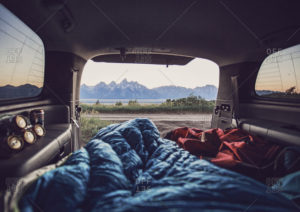 a spot and ready to move on.
Many who decide to sleep in their cars opt for an SUV or even a small van, which allows them to spread out in the back for sleeping, and easily pack everything away when it is time to move. There are camper van-style vehicles that basically give you a made-for-camping vehicle, but given that they begin at the price of a nice new car, we are going to skip over those for now. Most of our readers are on more of a budget.
A benefit of car camping is that you can really carry as much as your car will hold, so it is possible to bring plenty of food, equipment, and supplies. You typically clear out the vehicle at night when you sleep (but keep all food sealed — animals will find it).
A secret weapon when car camping is to carry a simple camping pad with you, one that will inflate and allow you to basically have a mattress to sleep on. It will cover up the imperfections in your vehicle and create 10x the comfort. When we drive with a larger SUV, we like to carry an Exped MegaMat Duo pad, fold all the seats down, lay the pad down, and we basically have a bedroom on wheels.
Check local regulations before you car camp. Often, you will need to the same permits and registration that you would if you were camping at a campground or with an RV.
Roof Top Camping
A riff on car camping is using a roof top tent. The roof top tent is a built-for-purpose piece of equipment that sits on the roof rack of your vehicle — or over the pickup bed in the case of a small truck.
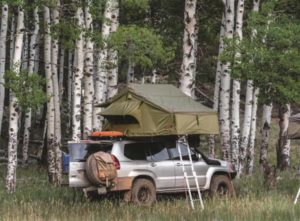
These roof top tents are quite nice, well-built, and give you rugged protection against the elements. They fold up into a small, compact package for when you are rolling down the highway the next morning. They typically have a built-in mattress of pretty high-quality, and because you don’t have to worry about the ground underneath, you don’t need mats or moisture tarps.
With a roof top tent, you typically do not need to seek out an actual campground. You can stay anywhere where you can find a level spot to park, and that of course will be legal for you to spend the night. We do not condone trespassing at North Outdoors!
The only downside, really, is the cost. These tents are not cheap. But they are comfy and convenient, and really catching on.
Camper Cabins
A welcome trend in recent years has been the growth of the camper cabin. Camper cabins are rustic, single-room cabins with minimal amenities. They are permanent structures that are often built in national parks or state parks. A typical camper cabin might be about 300 or 400 square feet, all on one level. 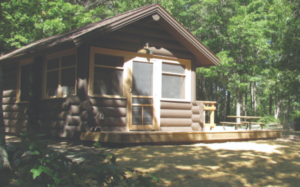
Some states have investing quite heavily in camper cabins, and some national parks and forests are really upping their game, too. That is making camper cabins pretty popular, so reservations are always a good idea.
Camper cabins typically do not have kitchens or bathrooms. Think of a camper cabin as a tent for someone who doesn’t want to mess with (or sleep in) a tent. You still bring your own gear, but you have a real roof over your head.
For someone who isn’t sure about setting up a tent but wants to experience the great outdoors in a state or national park, we seriously recommend checking-out a camper cabin. They are rustic, usually very well-kept, and placed in areas that give you nature right outside the front door.
You can typically reserve them online through the national or state park service website.